














Recycling Bins Buyer’s Guide
How to Choose Practical, Durable & Effective Recycling Bins for UK Sites
Recycling bins may look simple, but the right design can make a major difference to how people dispose of waste. Clear apertures, colours, labels, capacity, materials, and placement all influence recycling behaviour.
At Speedy Street Solutions Ltd, we supply high-quality recycling bins, litter bins, wheelie bin housings, bin hubs, and external waste management solutions for councils, schools, contractors, commercial sites, retail parks, public spaces, and private developments across the UK.
This guide explains how to choose recycling bins that are durable, easy to use, simple to maintain, and designed to reduce contamination.
Contents
- Why Recycling Bin Design Matters
- Key Considerations When Choosing Recycling Bins
- Anatomy of a Recycling Bin
- User Behaviour and Recycling Compliance
- Location and Placement
- Contamination and Waste Separation
- Internal vs External Recycling Bins
- Bin Hubs and Wheelie Bin Housings
- Materials and Durability
- Capacity and Sizing
- Customisation Options
- Future Trends in Recycling
- Why Choose Speedy Street Solutions?
- Recycling Bin FAQs
Why Recycling Bin Design Matters
A recycling bin is more than a container. It is a tool for guiding behaviour.
The best recycling bins help users quickly understand:
- What goes where
- Which waste stream to use
- How to dispose of items correctly
- Whether food, liquids, or packaging should be separated
A poorly designed recycling bin can increase contamination, reduce recycling rates, and create extra work for cleaning or waste collection teams.
A well-designed recycling bin helps to:
- Improve recycling compliance
- Reduce general waste
- Lower contamination levels
- Support sustainability targets
- Improve site cleanliness
- Make waste collection more efficient
- Create a tidier public environment
Key Considerations When Choosing Recycling Bins
Before choosing a recycling bin, consider:
- Location
- Footfall
- Waste type
- Capacity
- Number of waste streams
- Indoor or outdoor use
- Accessibility
- Servicing method
- Branding requirements
- Durability
- Security
- Budget and lifecycle cost
Different sites require different solutions. A school corridor, office canteen, high street, retail park, and public square will all need different recycling bin specifications.
Anatomy of a Recycling Bin
Body and Frame
The body of a recycling bin must be strong enough to withstand daily use, environmental exposure, cleaning, and public interaction.
Common options include:
- Powder-coated steel
- Galvanised steel
- Stainless steel
- Recycled plastic
- Timber-clad designs
- Wheelie bin housing systems
For external recycling bins, strength and corrosion resistance are particularly important.
Lids and Apertures
The lid and opening design have a direct impact on how people use the bin.
Common aperture types include:
- Circular holes for cans and bottles
- Narrow slots for paper
- Larger openings for general waste
- Food waste flaps
- Hooded apertures for outdoor use
- Lockable lids for public spaces
Clear aperture design helps reduce incorrect disposal.
Liners and Internal Compartments
Internal liners make recycling bins easier to empty, clean, and maintain.
Good liner design helps:
- Prevent leaks
- Reduce odours
- Protect the bin body
- Speed up emptying
- Improve hygiene
- Reduce maintenance costs
For multi-stream recycling bins, each compartment should be easy to access and service.
User Behaviour and Recycling Compliance
People make disposal decisions quickly, especially in busy public spaces.
Recycling bins should be instantly understandable using:
- Clear colour coding
- Simple text labels
- Recognisable icons
- Shaped apertures
- Consistent signage
- Logical waste stream placement
If users hesitate or feel unsure, they may place recyclable waste in general waste or contaminate the wrong stream.
The best recycling stations make the correct choice obvious.
Location and Placement
Even the best recycling bin will underperform if it is placed in the wrong location.
Recycling bins should be positioned:
- Where people naturally pause
- Near entrances and exits
- Beside general waste bins
- In food consumption areas
- Along high-footfall routes
- Near seating areas
- In visible and well-lit locations
Recycling bins should not obstruct pedestrian movement, wheelchair access, emergency routes, or maintenance access.
Good placement improves use and reduces littering.
Contamination and Waste Separation
Contamination is one of the biggest challenges in recycling.
Common causes include:
- Food residue
- Liquids left in containers
- Incorrect waste streams
- Confusing signage
- Poor aperture design
- Inconsistent colour coding
- Overfilled bins
To reduce contamination, recycling bins should use:
- Clear labels
- Colour-coded waste streams
- Simple instructions
- Separate apertures
- Matching signage
- Appropriate capacity
- Regular emptying schedules
Internal vs External Recycling Bins
Internal Recycling Bins
Internal recycling bins are commonly used in:
- Offices
- Schools
- Colleges
- Universities
- Canteens
- Reception areas
- Retail interiors
- Healthcare settings
They are usually smaller and designed with appearance, hygiene, and usability in mind.
Common internal capacities include:
- 40 litres
- 60 litres
- 90 litres
- 100 litres
Internal bins often include flaps, fascia plates, colour-coded apertures, and branded graphics.
External Recycling Bins
External recycling bins must be more robust and weather resistant.
They are commonly used in:
- High streets
- Parks
- Retail parks
- Transport hubs
- Public squares
- Business parks
- Leisure sites
- Schools
External bins usually require:
- Higher capacity
- Lockable access
- Weather-resistant materials
- Vandal-resistant construction
- Strong fixings
- Clear signage
- Easy servicing
Typical external recycling bin capacities range from 100 litres to 360 litres or more.
Bin Hubs and Wheelie Bin Housings
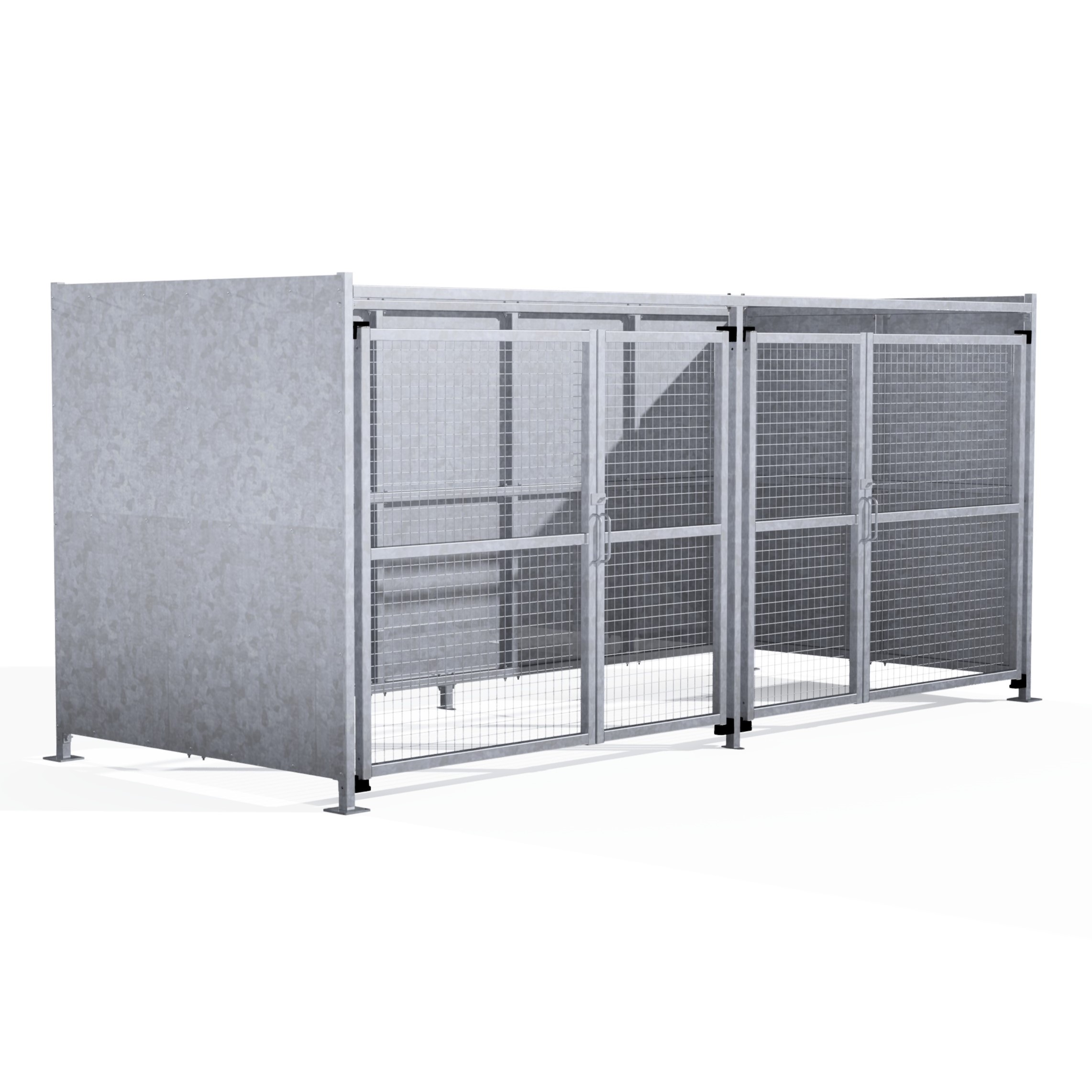
Bin hubs are becoming increasingly popular for large-capacity external waste and recycling management.
Instead of leaving wheelie bins exposed, a bin hub encloses them inside a secure, attractive housing.
Benefits include:
- Improved appearance
- Reduced vandalism
- Reduced fly-tipping risk
- Better waste stream organisation
- Easier collection
- Higher capacity
- Cleaner public spaces
- Improved recycling compliance
Bin hubs are ideal for:
- Local authorities
- Housing developments
- Retail parks
- Schools
- Universities
- Parks
- Public realm schemes
- Commercial estates
Wheelie bin housings can be designed for 120-litre, 240-litre, or 360-litre wheelie bins.
Materials and Durability
Galvanised Steel
Galvanised steel is one of the best choices for external recycling bins.
Benefits include:
- Strong corrosion resistance
- High vandal resistance
- Long lifespan
- Excellent durability
- Suitable for public spaces
Powder-Coated Steel
Powder-coated steel adds colour, protection, and branding flexibility.
Advantages include:
- Wide RAL colour range
- Professional appearance
- Durable finish
- Suitable for outdoor use
- Strong visual consistency
Stainless Steel
Stainless steel recycling bins are ideal for modern, premium environments.
Common uses include:
- Airports
- Shopping centres
- Offices
- Commercial interiors
- Healthcare settings
- Prestige developments
Recycled Plastic
Recycled plastic bins are sustainable, weather resistant, and low maintenance.
They are ideal for:
- Schools
- Parks
- Playgrounds
- Coastal sites
- Community spaces
Timber-Clad Recycling Bins
Timber-clad bins provide a natural look while retaining internal strength.
They are well suited to:
- Parks
- Heritage sites
- Landscaped areas
- Visitor attractions
- Rural environments
Capacity and Sizing
Choosing the right capacity helps prevent overflow and keeps waste collection efficient.
Low-Footfall Sites
Recommended capacity: 40–90 litres
Suitable for:
- Offices
- Reception areas
- Small classrooms
- Low-use corridors
Medium-Footfall Sites
Recommended capacity: 100–160 litres
Suitable for:
- Schools
- Canteens
- Business parks
- Leisure centres
- Retail entrances
High-Footfall Sites
Recommended capacity: 160–360 litres+
Suitable for:
- Town centres
- Shopping areas
- Transport hubs
- Parks
- Tourist destinations
- Public realm schemes
Customisation Options
Recycling bins can be customised to match the site and improve user compliance.
Popular options include:
- Colour-coded apertures
- Custom RAL colours
- Logos
- Vinyl graphics
- Recycling icons
- Waste stream labels
- Anti-graffiti coatings
- Anti-flyposting finishes
- Lockable doors
- Cigarette disposal units
- Dual or multi-stream compartments
- Advertising panels
Clear custom graphics can significantly improve correct recycling behaviour.
Future Trends in Recycling
Recycling infrastructure is becoming more user-focused, more secure, and more integrated into public spaces.
Key trends include:
- Larger bin hubs
- Multi-stream recycling stations
- Stronger contamination control
- Better signage
- Smart waste monitoring
- Recycled material construction
- More attractive public realm designs
- Secure wheelie bin housings
- Consistent national recycling messaging
As recycling requirements evolve, organisations will increasingly need flexible systems that can adapt to different waste streams and collection methods.
Why Choose Speedy Street Solutions Ltd?
Speedy Street Solutions supplies recycling bins, litter bins, bin hubs, and external waste management products throughout the UK.
We work with:
- Local authorities
- Schools
- Contractors
- Developers
- Retail parks
- Business parks
- Public sector organisations
- Commercial premises
- Housing providers
Our recycling bin range includes:
- Outdoor recycling bins
- Indoor recycling bins
- Dual recycling bins
- Multi-stream recycling bins
- Wheelie bin housings
- Bin hubs
- Steel recycling bins
- Stainless steel recycling bins
- Recycled plastic bins
- Timber-clad bins
Customers choose Speedy Street Solutions because we offer:
- Competitive pricing
- UK-wide supply
- Durable commercial-grade products
- Expert advice
- Bespoke colours and branding
- Fast lead times
- Practical street furniture solutions
Recycling Bin FAQs
What size recycling bin do I need?
For indoor low-footfall areas, 40–90 litres is usually suitable. Outdoor and high-footfall sites may require 160–360 litres or larger bin hubs.
What is the best material for outdoor recycling bins?
Galvanised or powder-coated steel is one of the best choices for outdoor recycling bins due to its strength, durability, and weather resistance.
How can I reduce recycling contamination?
Use clear colour coding, shaped apertures, simple labels, consistent signage, and place recycling bins beside general waste bins.
What is a bin hub?
A bin hub is a secure external housing designed to contain wheelie bins, improve appearance, reduce misuse, and organise multiple waste streams.
Are recycling bins available with multiple compartments?
Yes. Dual, triple, and multi-stream recycling bins are available for different waste types.
Can recycling bins be customised?
Yes. Recycling bins can be customised with colours, logos, vinyl graphics, icons, labels, and anti-graffiti finishes.
Are external recycling bins lockable?
Many external recycling bins are supplied with lockable doors or lids to prevent misuse and improve security.
What is the difference between indoor and outdoor recycling bins?
Indoor bins are usually smaller and focused on appearance and hygiene, while outdoor bins are larger, stronger, weather resistant, and vandal resistant.
Do recycling bins need to be placed next to general waste bins?
Yes, this is strongly recommended. Pairing recycling bins with general waste bins reduces contamination and makes correct disposal easier.
For expert advice on recycling bins, bin hubs, wheelie bin housings, and external waste management solutions, contact Speedy Street Solutions Ltd today.