
















Outdoor Benches Buyer’s Guide
How to Choose Durable, Attractive & Long-Lasting Public Seating for UK Spaces
Outdoor benches are far more than simple seating solutions. They help shape how people interact with public spaces, encourage social connection, improve accessibility, and make outdoor environments more welcoming and functional.
Whether installed in parks, schools, retail developments, transport hubs, town centres, commercial spaces, or public realm schemes, the right bench can dramatically improve the usability and appearance of an area.
At Speedy Street Solutions Ltd, we supply high-quality outdoor benches and street furniture across the UK, helping councils, contractors, developers, schools, architects, and businesses create durable and attractive public spaces.
This comprehensive buyer’s guide explains everything you need to know when selecting outdoor seating, including materials, vandal resistance, coastal protection, accessibility, sustainability, installation methods, and future trends.
Contents
- Why Outdoor Benches Matter
- Choosing the Right Bench for Your Environment
- Types of Outdoor Benches
- Bench Materials Explained
- Coastal Protection & Corrosion Resistance
- Vandal Resistance & Anti-Social Behaviour
- Bench Fixing Methods
- Sustainability & FSC Timber
- Accessibility Regulations & Best Practice
- Future Trends in Outdoor Seating
- Why Choose Speedy Street Solutions?
- Outdoor Bench FAQs
Why Outdoor Benches Matter
Outdoor benches play a vital role in public spaces by providing places for people to:
- Rest
- Socialise
- Wait
- Relax
- Observe
- Eat
- Gather
- Recharge
Well-designed seating improves comfort, accessibility, and public wellbeing while encouraging people to spend longer in outdoor environments.
Benches are now considered an essential part of modern public realm design and are commonly installed in:
- Parks
- Town centres
- Schools
- Retail parks
- Transport hubs
- Commercial developments
- Healthcare settings
- Housing developments
- Public squares
- Coastal promenades
The best outdoor seating combines durability, comfort, appearance, and low maintenance.
Choosing the Right Bench for Your Environment
Different environments require different types of seating.
When selecting a bench, consider:
- Expected footfall
- Exposure to weather
- Risk of vandalism
- Maintenance requirements
- Accessibility
- Budget
- Visual appearance
- Site surroundings
- Coastal exposure
- Lifespan expectations
A bench designed for a quiet heritage park may not perform well in a busy railway station or urban streetscape.
Types of Outdoor Benches
Benches with Backrests
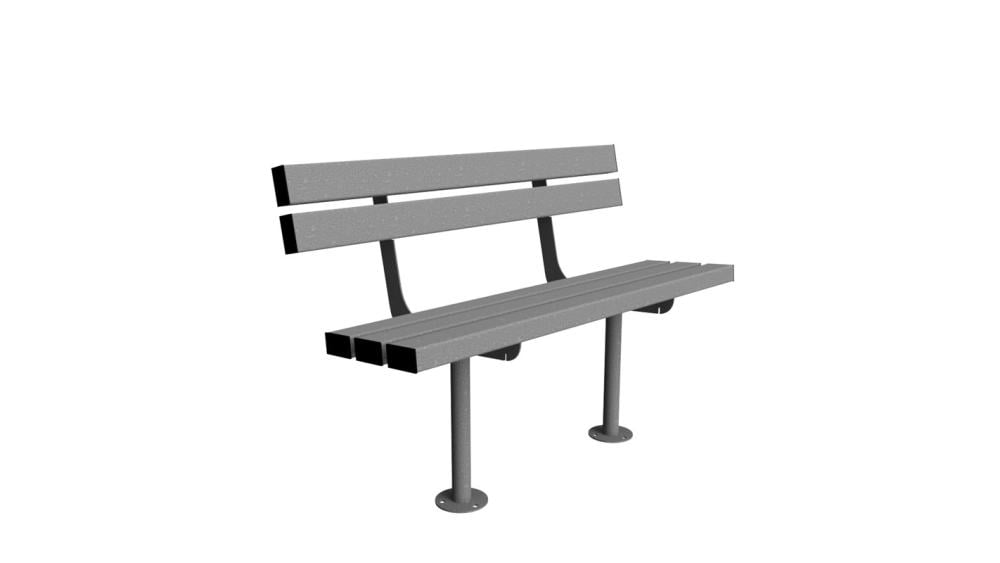
Benches with backrests provide additional support and comfort, making them ideal for areas where people may sit for longer periods.
Common locations include:
- Parks
- Public squares
- Waiting areas
- Town centres
- Coastal promenades
- Schools
They are one of the most popular outdoor seating options for public spaces.
Backless Benches
Backless benches offer flexibility and space efficiency.
Benefits include:
- Easier movement around seating
- Modern appearance
- Better suitability for narrow pathways
- Flexible seating direction
They are often used in:
- High-footfall areas
- Urban landscapes
- Transport interchanges
- Commercial developments
Modular Benches
Modular benches allow designers to create custom seating layouts including:
- Curves
- Circles
- Long runs
- Clusters
- Integrated planters
These benches encourage social interaction and are increasingly popular in contemporary public realm projects.
Heritage Benches
Heritage-style benches are typically manufactured using:
- Cast iron frames
- Timber slats
- Traditional detailing
They are ideal for:
- Conservation areas
- Parish councils
- Historic parks
- Listed environments
- Traditional town centres
Contemporary Urban Benches
Modern urban benches often combine:
- Powder-coated steel
- Stainless steel
- Timber
- Concrete
- Composite materials
These benches suit:
- Modern commercial schemes
- Mixed-use developments
- Transport hubs
- Architectural public spaces
Bench Materials Explained
Timber Benches
Timber remains one of the most popular materials for outdoor benches because of its natural appearance and comfort.
Hardwoods such as Iroko are especially popular due to their:
- Excellent durability
- Natural weather resistance
- Long lifespan
- Attractive ageing process
- Minimal maintenance requirements
Over time, quality hardwoods develop an attractive silver-grey patina while retaining structural integrity.
Timber benches are commonly used in:
- Parks
- Playgrounds
- Public gardens
- Heritage settings
- Residential developments
Mild Steel Benches
Powder-coated mild steel benches are popular for modern urban environments.
Benefits include:
- Strong vandal resistance
- Lower cost
- Contemporary appearance
- Long-term durability
- Wide colour choice
Anthracite Grey (RAL 7016) is one of the UK’s most popular finishes for public seating.
Steel benches are widely used in:
- Railway stations
- Bus stations
- Retail parks
- Schools
- Commercial developments
- Public walkways
Cast Iron Benches
Cast iron benches remain highly desirable for heritage environments.
Advantages include:
- Traditional appearance
- Excellent durability
- Strong structural performance
- Timeless design
Cast iron is often paired with hardwood timber slats to create classic public seating.
Ideal applications include:
- Conservation areas
- Historic parks
- Civic spaces
- Parish council projects
Stainless Steel Benches
Stainless steel benches provide a premium architectural appearance and exceptional corrosion resistance.
Benefits include:
- Modern aesthetic
- Long lifespan
- Excellent weather resistance
- Low maintenance
- Strong corrosion protection
Grade 316 stainless steel is especially suitable for coastal environments due to its increased salt resistance.
Concrete Benches
Concrete benches are extremely durable and highly resistant to vandalism.
Advantages include:
- Very long lifespan
- Minimal maintenance
- Strong anti-theft properties
- Excellent stability
- Modern architectural appearance
Concrete seating is particularly suitable for:
- Urban parks
- Public squares
- Civic spaces
- High-footfall environments
Composite & Hybrid Benches
Hybrid bench designs combine multiple materials such as:
- Stone
- Timber
- Steel
- Concrete
- Granite
These designs provide a balance of:
- Durability
- Comfort
- Weight
- Visual appeal
- Contemporary design
They are commonly used in premium urban developments and public realm schemes.
Coastal Protection & Corrosion Resistance
Coastal locations require additional protection due to:
- Salt air
- High humidity
- Strong winds
- Increased corrosion risk
Without proper specification, outdoor benches can deteriorate rapidly in coastal environments.
Recommended Coastal Protection Measures
For coastal installations, benches should ideally include:
- Hot-dip galvanising
- Zinc-rich primer
- Powder-coated finish
- Marine-grade stainless steel
- Corrosion-resistant fixings
This layered protection helps prevent corrosion beneath the surface coating.
Best Materials for Coastal Areas
The most suitable coastal seating materials include:
- Grade 316 stainless steel
- Galvanised steel with coastal-grade coating systems
- Hardwood timber
- Recycled plastic
- Composite materials
These materials provide significantly better long-term performance in salty environments.
Vandal Resistance & Anti-Social Behaviour
Public seating is frequently exposed to vandalism, misuse, and attempted theft.
For high-risk locations, anti-vandal bench designs are highly recommended.
Anti-Vandal Features
Effective anti-vandal seating may include:
- Steel construction
- Root-fixed installation
- Tamper-resistant fixings
- Heavy concrete bases
- Reinforced framework
- Reduced removable components
- Graffiti-resistant finishes
All-steel benches are especially popular in:
- Transport hubs
- Schools
- City centres
- Retail parks
- Public transport waiting areas
Bench Fixing Methods
Correct installation is essential for safety, durability, and vandal resistance.
Surface Bolted Benches
Surface-mounted benches are bolted directly to concrete foundations using heavy-duty anchor bolts.
Benefits include:
- Faster installation
- Easy replacement
- Strong fixing method
Root Fixed Benches
Root-fixed benches are embedded directly into concrete foundations below ground level.
Advantages include:
- Maximum security
- Strong anti-theft protection
- Excellent long-term stability
Submerged Baseplate Installation
This method conceals fixings beneath the surface for a cleaner appearance.
It is commonly used in:
- High-end developments
- Public realm schemes
- Architectural projects
Surface Mounted Seating
Some heavier benches may simply rest on the surface without deep foundations.
However, secure fixings are still strongly recommended for public safety.
Sustainability & FSC Timber
Sustainability has become increasingly important in public realm projects.
Many organisations now prioritise:
- FSC-certified timber
- Recycled materials
- Low-maintenance products
- Long product lifespans
- Recyclable components
- Sustainable sourcing
FSC Timber Explained
FSC-certified timber provides traceability throughout the supply chain and helps support responsible forest management.
Hardwoods such as Iroko are often selected because of their:
- Long lifespan
- Reduced treatment requirements
- Natural durability
- Lower maintenance demands
Long-lasting products are often the most sustainable choice because they reduce replacement frequency and material waste.
Accessibility Regulations & Best Practice
Outdoor seating should be designed to support inclusive public spaces.
Good accessibility includes:
- Appropriate seat heights
- Armrests for support
- Wheelchair transfer space
- Clear surrounding access
- Adequate spacing between benches
- Visual contrast
- Comfortable seating positions
BS 8300-1:2018 Guidance
BS 8300 provides guidance on accessible external environments and public seating.
It recommends features such as:
- Armrests to assist standing
- Suitable seat heights
- Accessible routes
- Inclusive layouts
These principles help improve usability for older people and those with mobility impairments.
Future Trends in Outdoor Seating
Public seating is evolving rapidly as towns, cities, schools, and developers seek smarter and more sustainable public spaces.
Current trends include:
- Smart benches
- Solar-powered seating
- Integrated device charging
- Public Wi-Fi connectivity
- Modular seating layouts
- Sustainable materials
- Green infrastructure integration
- Bespoke architectural seating
- Hybrid material combinations
Technology-integrated seating is becoming increasingly popular in modern public realm projects.
Why Choose Speedy Street Solutions Ltd?
Speedy Street Solutions supplies high-quality outdoor benches and public seating solutions throughout the UK.
We support:
- Local authorities
- Schools
- Contractors
- Architects
- Housing developers
- Retail parks
- Commercial projects
- Public realm schemes
Our outdoor seating range includes:
- Timber benches
- Steel benches
- Stainless steel seating
- Concrete benches
- Heritage benches
- Contemporary public seating
- Modular seating systems
- Anti-vandal benches
Customers choose Speedy Street Solutions because we offer:
- Competitive pricing
- Durable commercial-grade products
- UK-wide supply
- Expert technical advice
- Bespoke seating solutions
- Fast lead times
- High-quality materials
Outdoor Bench FAQs
What is the best material for outdoor benches?
The best material depends on the environment. Timber offers natural appearance and comfort, steel provides vandal resistance, and stainless steel offers premium corrosion protection.
Are timber benches suitable for public spaces?
Yes. Hardwoods such as Iroko are highly durable and widely used in parks, playgrounds, and public realm projects.
What is the most vandal-resistant bench?
All-steel or concrete benches with root-fixed installation provide the highest level of vandal resistance.
Which benches are best for coastal areas?
Grade 316 stainless steel, galvanised steel with coastal-grade coatings, hardwood timber, and composite materials are all suitable for coastal environments.
How long do outdoor benches last?
Lifespan depends on materials, environment, and maintenance, but quality public benches can last anywhere from 15 to 100 years.
Do outdoor benches require maintenance?
Most benches require only basic maintenance such as cleaning, inspections, and occasional recoating or timber treatment depending on the material.
What fixing method is best for public benches?
Root-fixed and bolted installations generally provide the best long-term security and stability.
Are benches available in custom colours?
Yes. Powder-coated steel benches are available in a wide range of RAL colours to match branding or surrounding architecture.
For expert advice on outdoor benches, public seating, and street furniture solutions, contact Speedy Street Solutions Ltd today.